
Does Cooking Destroy the Toxins?
Unfortunately, normal cooking methods do not fully eliminate glycoalkaloids.
Boiling, baking, frying, or microwaving potatoes may reduce the amount slightly, but these toxins are relatively heat-stable. That’s why removing green sections or discarding severely affected potatoes is important for safety.
Peeling the potato can help reduce glycoalkaloid content because most of these compounds are concentrated near the skin.
How to Store Potatoes to Prevent Greening and Sprouting
Proper storage can significantly extend the life of potatoes and reduce the chances of greening or sprouting.Horticulture
Follow these tips:
Keep potatoes in a cool, dark place: A temperature between 45°F and 55°F (7°C–13°C) is ideal. A pantry, cellar, or cupboard works well.
Avoid light exposure: Store potatoes in opaque containers, paper bags, or breathable baskets rather than clear plastic bags.
Ensure good ventilation: Potatoes need airflow to prevent moisture buildup, which can accelerate spoilage.
Keep them away from onions: Onions release gases that can cause potatoes to sprout faster.
Do not refrigerate raw potatoes: Very cold temperatures convert starch into sugar, which can alter flavor and texture.
The Bottom Line
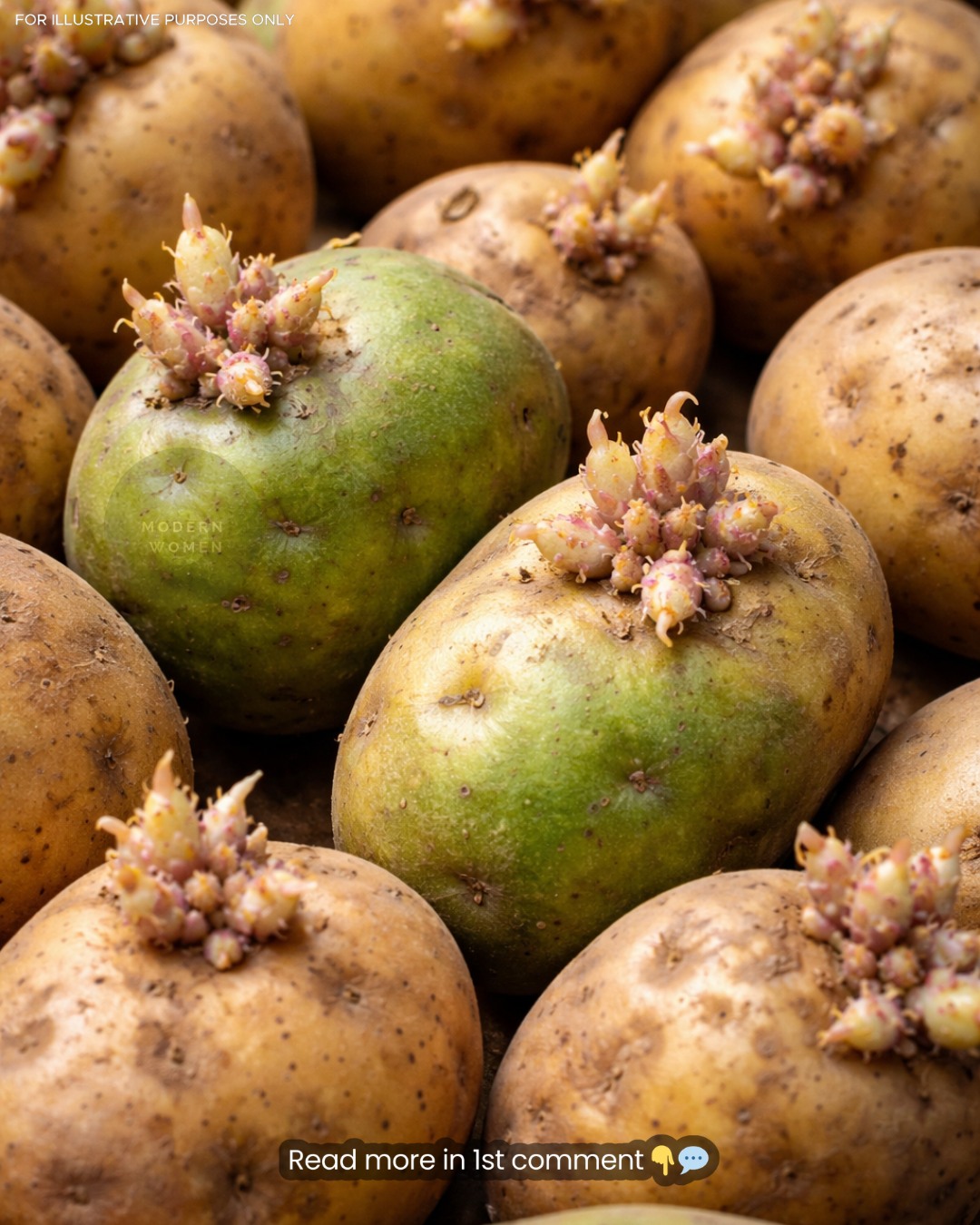
A potato that has turned slightly green or developed small sprouts isn’t always dangerous, but it should be handled carefully. Cutting away green areas and removing sprouts can make a mildly affected potato safe to eat if the potato is still firm and fresh.
However, heavily green, bitter, soft, or extensively sprouted potatoes should be discarded to avoid potential exposure to natural toxins.
