
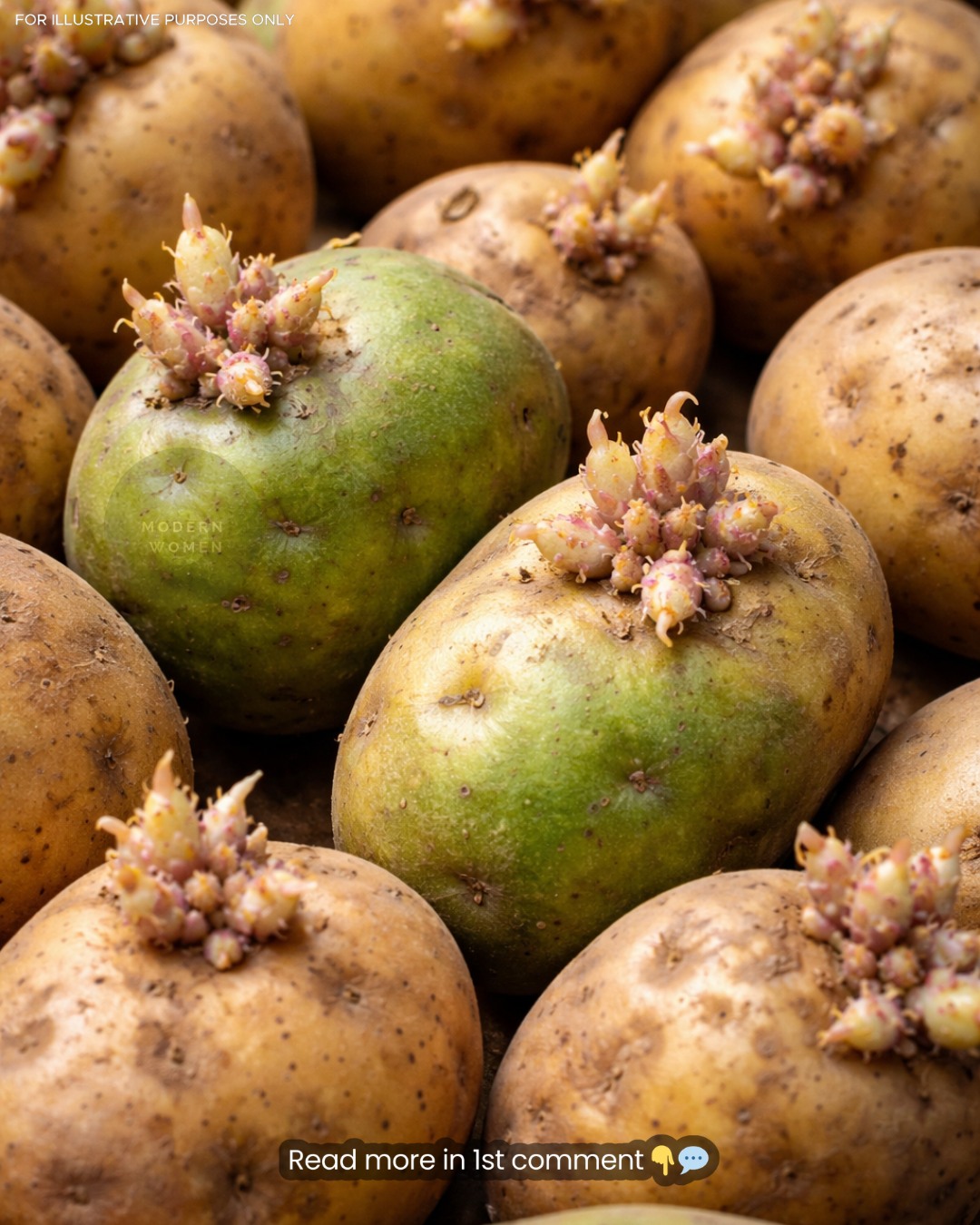
Potatoes are one of the most commonly used ingredients in kitchens around the world. They are affordable, nutritious, and incredibly versatile. However, many people have opened their pantry or vegetable basket only to find that their potatoes have turned slightly green or started growing small sprouts—often called “eyes.” This raises an important question: Are green or sprouting potatoes safe to eat, or should they be thrown away?
Understanding why potatoes turn green or sprout, and how this affects their safety, can help you avoid unnecessary waste while protecting your health .
Why Do Potatoes Turn Green?
Potatoes naturally produce a compound called chlorophyll, which is the same pigment that gives plants their green color. When potatoes are exposed to light—whether sunlight or artificial indoor light—they begin producing chlorophyll beneath the skin, which causes the green tint.
While chlorophyll itself is harmless, its appearance is often a warning sign that the potato may also contain higher levels of glycoalkaloids, particularly solanine and chaconine. These natural toxins help protect the potato from insects and disease, but they can be harmful to humans when consumed in large amounts.
The green color doesn’t always mean the potato is dangerous, but it indicates that the levels of these compounds may be increasing.
Why Do Potatoes Grow “Eyes” or Sprouts?
Potatoes are actually tubers, meaning they are underground storage organs that can grow into new plants. When potatoes are stored for a long time—especially in warm or humid conditions—they begin the natural process of sprouting.
The small bumps on a potato are known as eyes, which contain buds capable of producing new shoots. Over time, these eyes can grow into visible sprouts.
Sprouting is a sign that the potato is aging and using up its stored nutrients to support new growth.
Are Green or Sprouting Potatoes Safe to Eat?
The answer depends on how severe the greening or sprouting is.
Slightly green potatoes: If only a small part of the potato has turned green, it can often still be used safely. Simply cut away the green portion along with a generous amount of surrounding flesh before cooking.
Potatoes with small sprouts: If the potato is still firm and the sprouts are small, you can remove the sprouts and peel the potato before using it.
However, you should discard the potato if:
The green color covers a large area.
The potato tastes bitter.
The sprouts are long and numerous.
The potato feels soft, wrinkled, or shriveled.
These signs indicate that the potato may contain elevated levels of glycoalkaloids.
What Happens If You Eat Too Much Solanine?
Consuming potatoes with high levels of solanine can cause food poisoning symptoms, although this is relatively rare.
Possible symptoms include:
Nausea
Vomiting
Stomach cramps
Diarrhea
Headache
Dizziness
In severe cases, extremely high doses could affect the nervous system, though such cases are uncommon and usually involve eating large quantities of heavily green potatoes.
Fortunately, the bitter taste of high-solanine potatoes usually discourages people from eating them.
Continued on next page 👇(page 2)👇
